
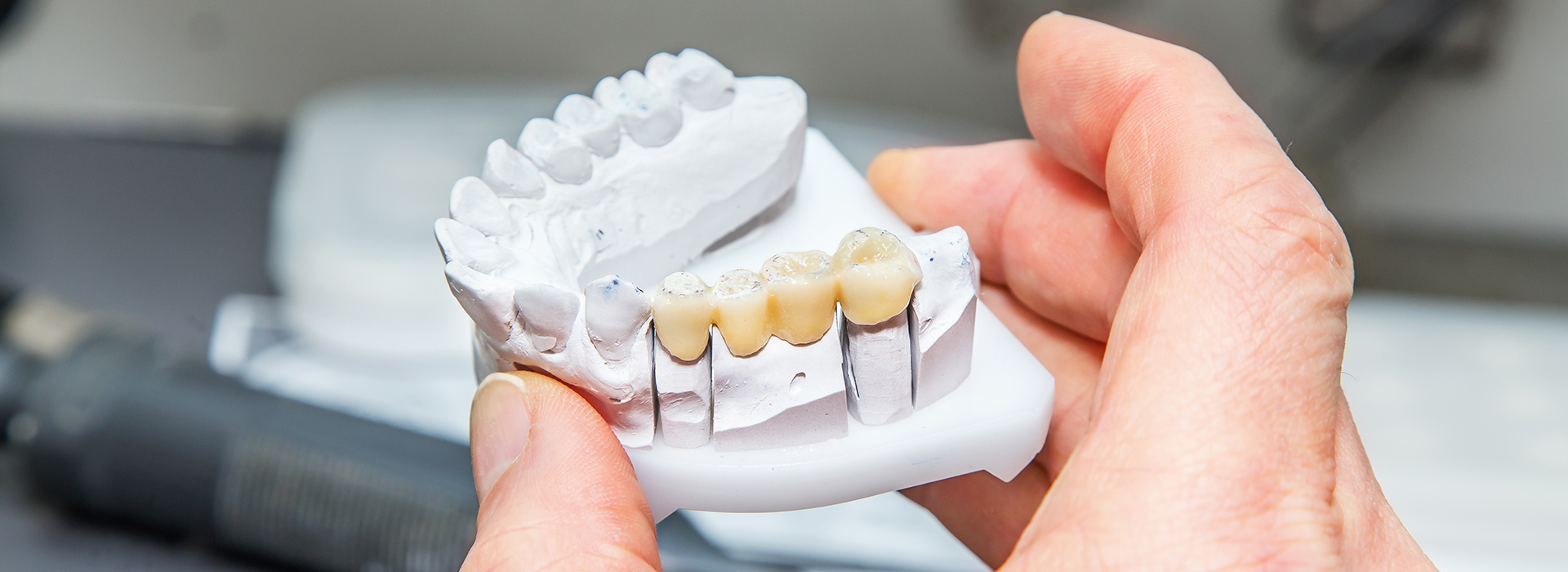
Dental Bridges
Missing teeth do more than cause embarrassing gaps in your smile. They can impair your ability to smile, speak, and chew with confidence; allow the adjacent teeth to drift into unoccupied spaces; cause teeth in the opposing arch to extrude; and promote cavities and gum disease.
A dental bridge offers a highly effective, stable, and fixed solution for replacing missing teeth. Unlike removable partial dentures that clasp on to the remaining teeth, a dental bridge relies on the support of crowns attached to teeth adjacent to the edentulous area or strategically placed dental implants.
Common types include Traditional Fixed Bridge, Implant-Supported Bridges, Cantilever Bridge, and Maryland Bridge. The most commonly recommended are the traditional fixed bridge and implant-supported bridge.
Fixed bridges are typically fabricated over the course of multiple visits. The process involves the preparation of the supporting teeth, impression taking, the placement of a temporary bridge, and the try-in and cementation of the permanent restoration.
Surgery to place dental implants for an implant-supported bridge is typically considered a minor surgical procedure and performed on an outpatient basis. It can take a few months for the implants to fully integrate with the surrounding bone.
Interested in Dental Bridges? Contact Quincy Dental today at (617) 471-4449 to schedule a consultation.